
Sometimes a business gets busy. Really busy.
Enquiries are up. New work is coming in. Existing clients are spending more. People seem to know who you are.
And then comes the obvious question:
What’s working?
It sounds like it should be easy to answer. Was it the Facebook post? The LinkedIn activity? Google? SEO? The email campaign? The new website content? Word of mouth?
Usually, the answer is less tidy.
People rarely experience your marketing in a straight line
We tend to talk about marketing channels separately because that makes them easier to measure. A Facebook post gets this many views. A LinkedIn post reaches this many people. A website page receives this many visits. An email gets this many opens.
But that isn’t necessarily how a potential customer experiences your business. They might see your name on Facebook without clicking anything. A month later, someone recommends you. They Google your business and recognise the name. They visit your website, read a page or two, then leave. A few weeks later, something prompts them to come back. Then they call.
Which piece of marketing “worked”? Probably all of it.
Attribution only tells part of the story
Digital platforms are very good at giving us numbers. They’re less good at explaining the accumulated effect of being consistently visible. If someone clicks a Google result and immediately makes an enquiry, Google is easy to credit.
But what if they searched for you because they had already seen three social posts? What if the reason they felt comfortable contacting you was that your website looked current and useful? What if they remembered your name because they had seen it repeatedly over the previous six months?
Those earlier touchpoints may never appear in a conversion report. That doesn’t mean they didn’t matter.
Familiarity has value
For many businesses, particularly professional services and considered purchases, people don’t act the first time they encounter you.
They notice. Then they notice again. Over time, your business starts to feel familiar.
That familiarity can make a recommendation more persuasive, a Google search more likely, or a website visit more reassuring. This is one of the reasons consistent marketing can outperform occasional bursts of activity.
It isn’t necessarily because every post is generating leads. It’s because each useful, relevant appearance is adding another small piece to the picture people have of the business.
The channels support each other
This is also why I’m wary of judging marketing channels completely in isolation.
Social media can increase awareness. SEO can help people find you when they begin actively searching. Website content can answer questions and establish credibility. Google Business Profiles can reinforce that you are active and legitimate. Email can keep you in front of people who already know you. And referrals can send people into all of those channels looking for reassurance before they make contact.
None of these exists in a vacuum. The stronger the overall digital presence, the more effectively those individual parts can support one another.
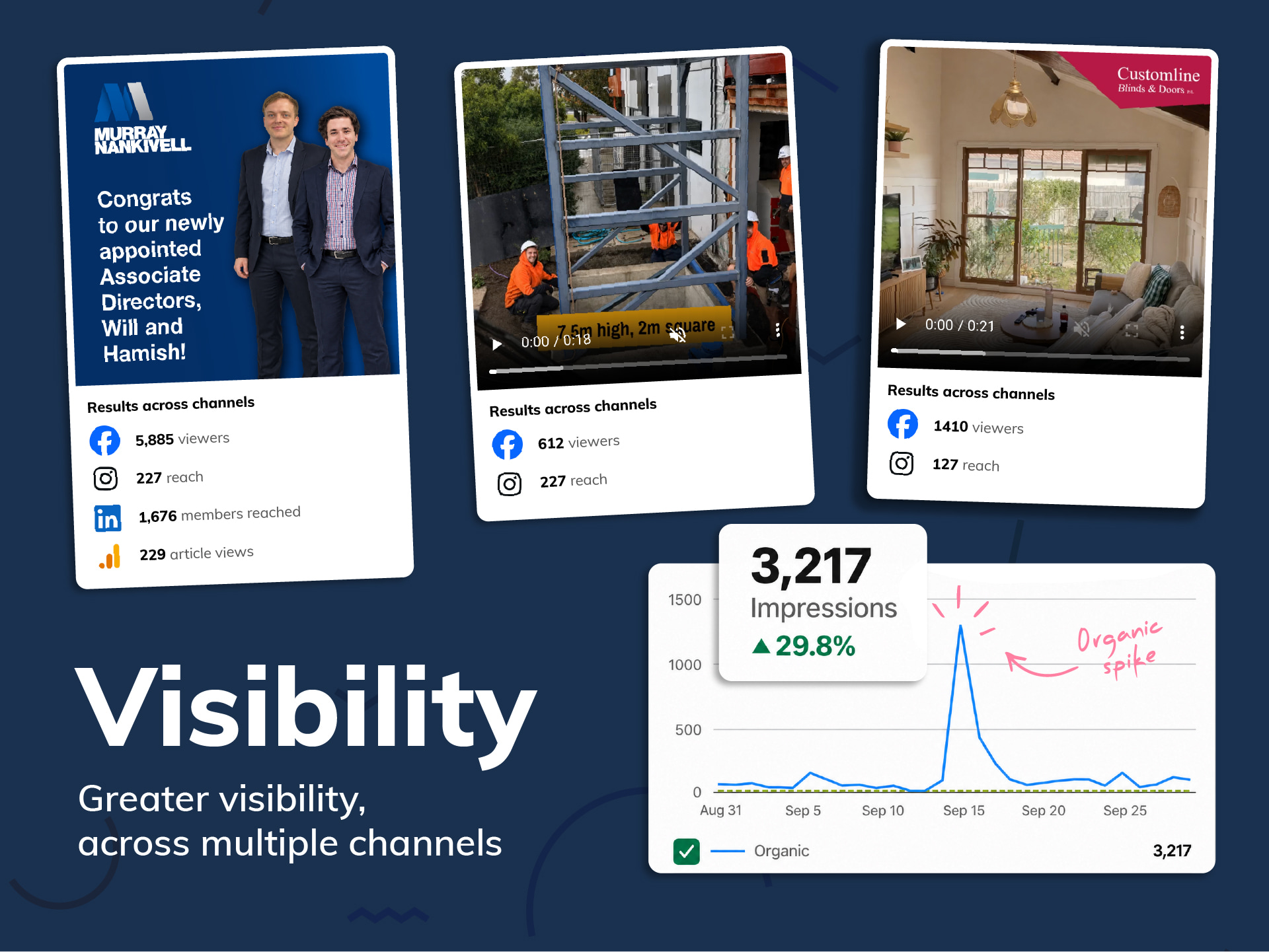
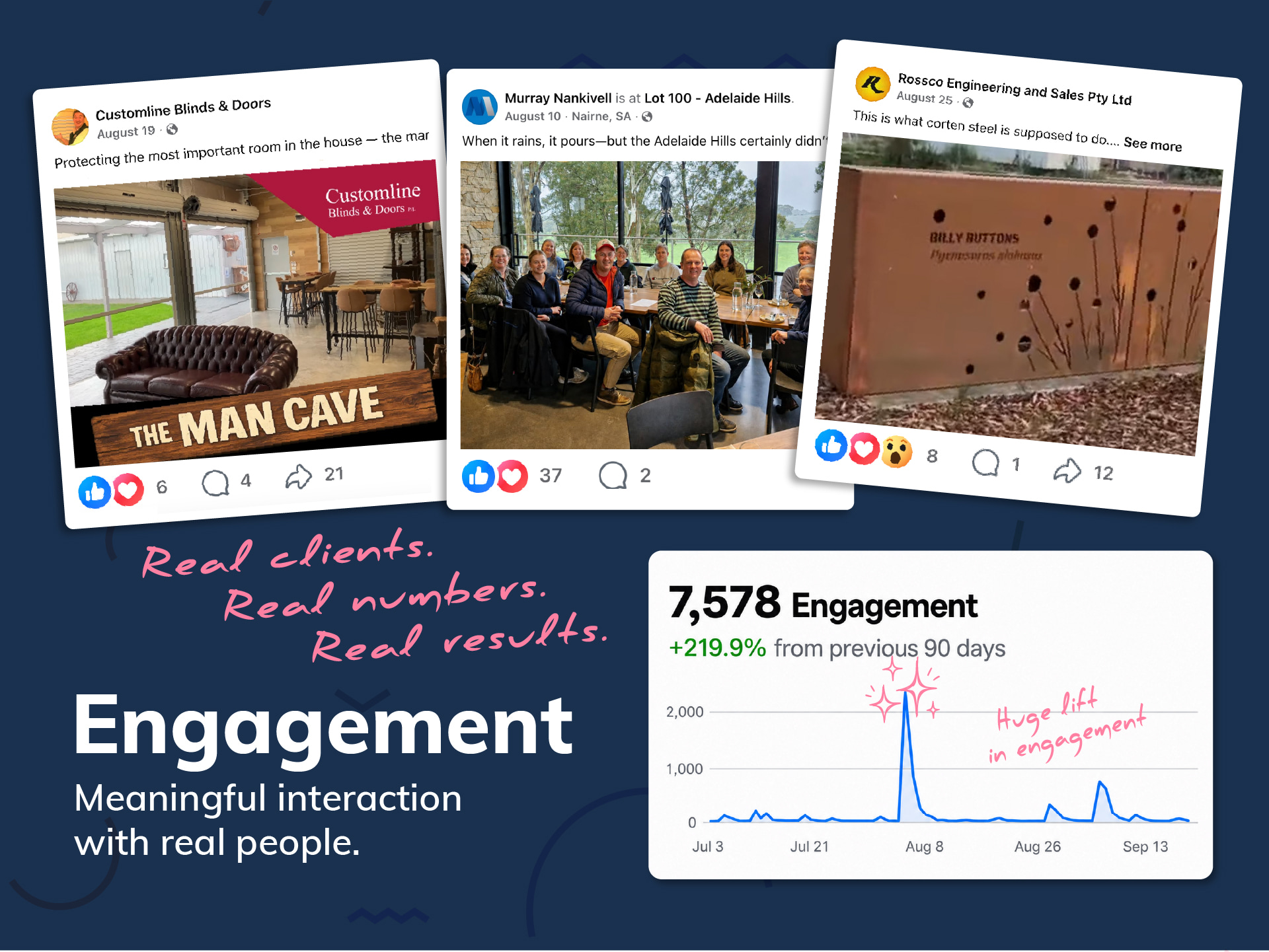
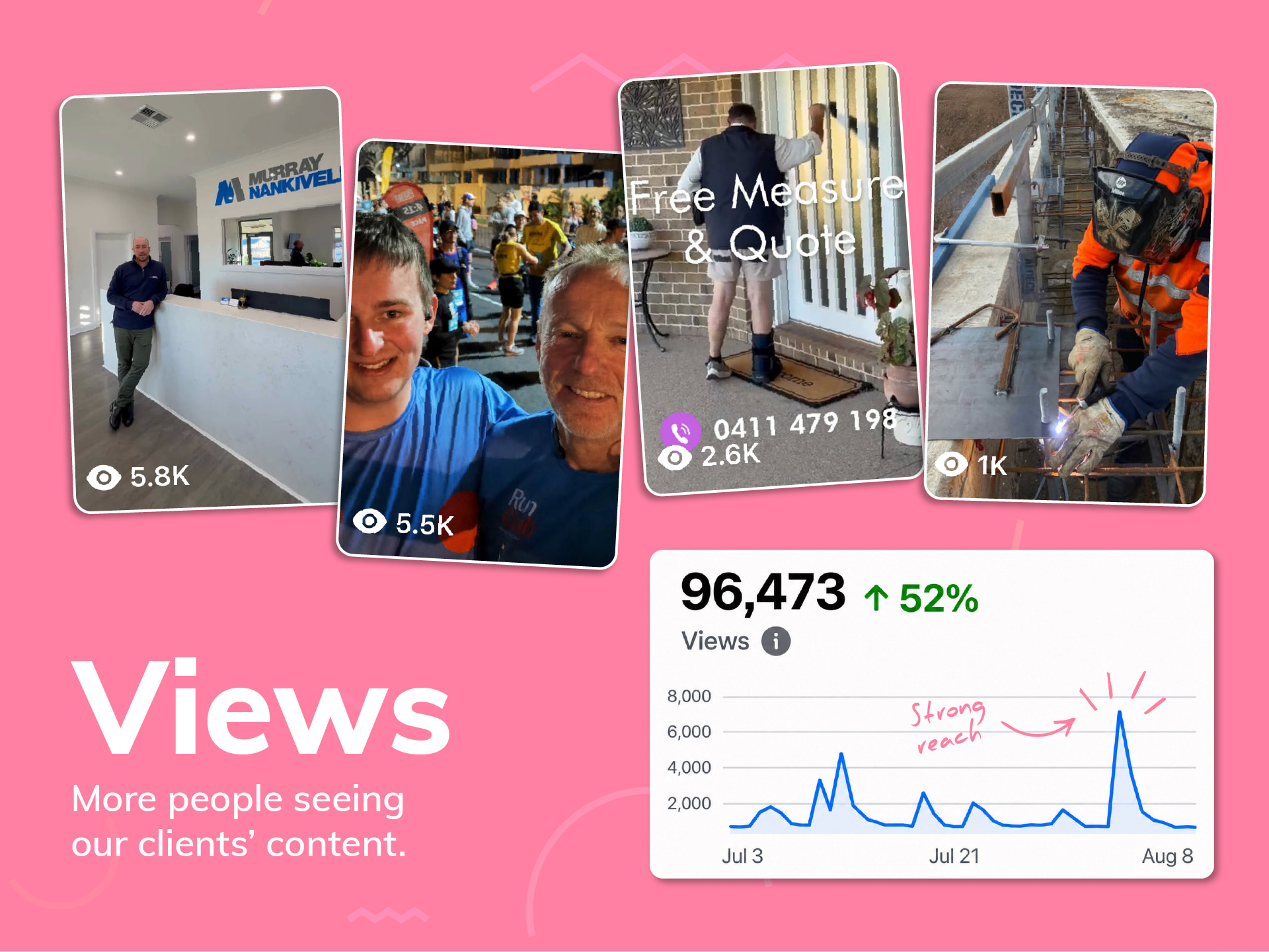
The examples in this article come from regional Australian businesses managed by Wide Open Co. They’re included to show how engagement, audience views and broader visibility can build across regional markets.
So what should you measure?
Measurement still matters.
You should know whether search visibility is increasing, whether people are reaching the website, whether social content is reaching beyond the existing audience, and whether enquiries are ultimately coming through.
But it’s worth resisting the temptation to ask every individual piece of content to prove its value in isolation.
Sometimes the more useful question is:
Are more of the right people seeing us, finding us, recognising us and trusting us?
If those signals are improving — and business activity is moving with them — you may be seeing the cumulative effect of marketing doing what it is supposed to do.
Even if no dashboard can tell you exactly which post started it.
Want to know what’s actually working?


